Products- White letters

High Temperature Car Bottom Furnaces

High Temperature Car Bottom Furnaces

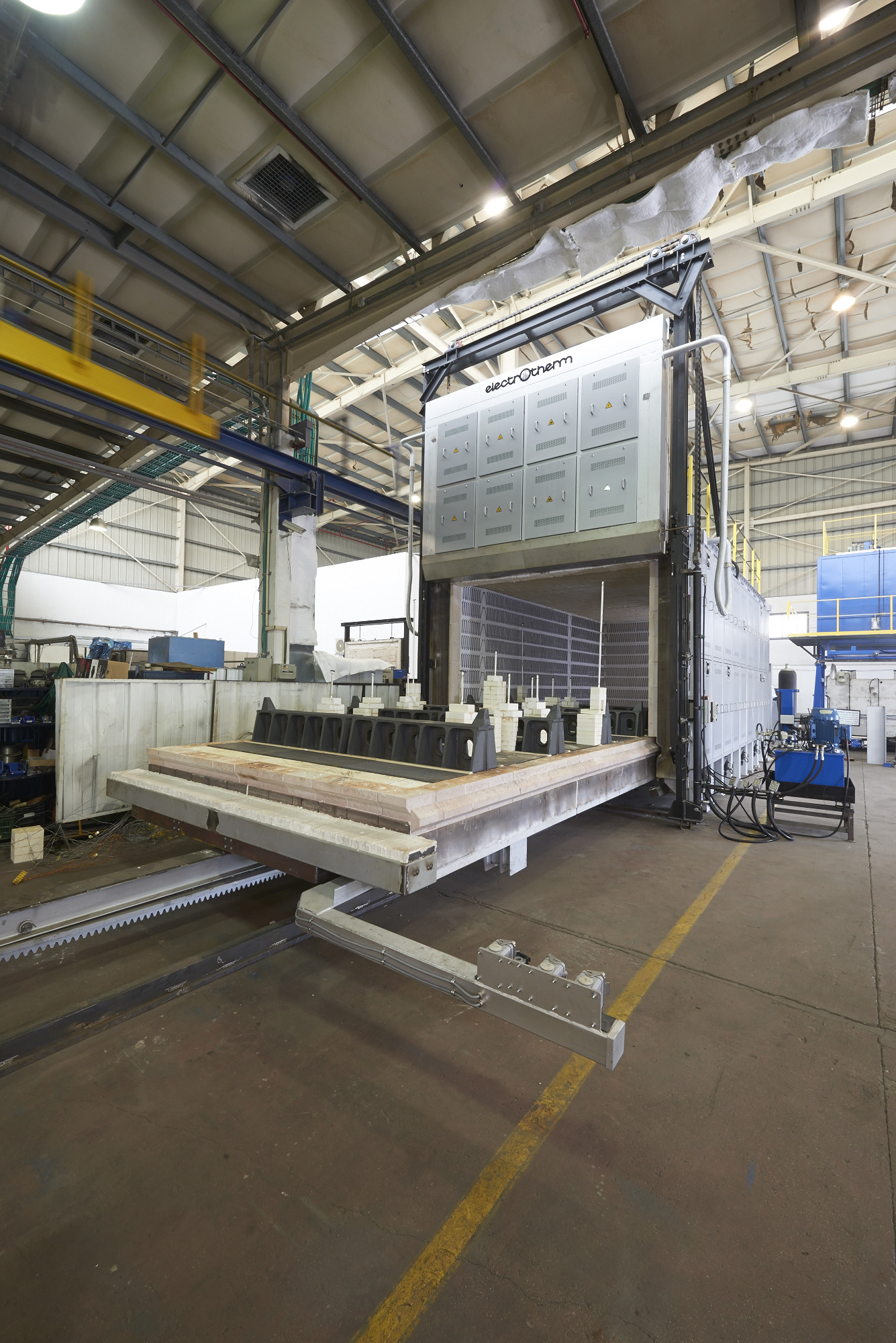
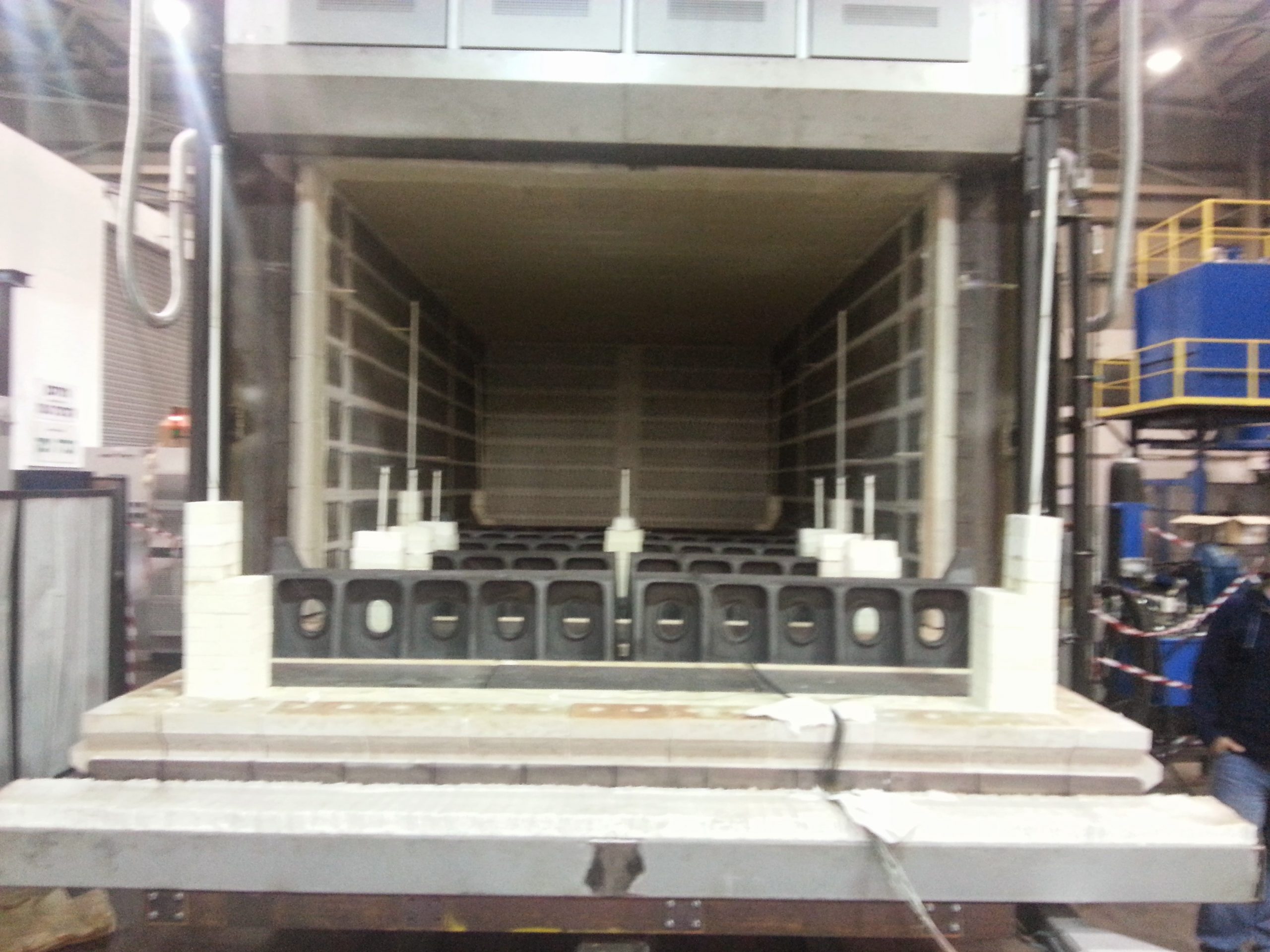
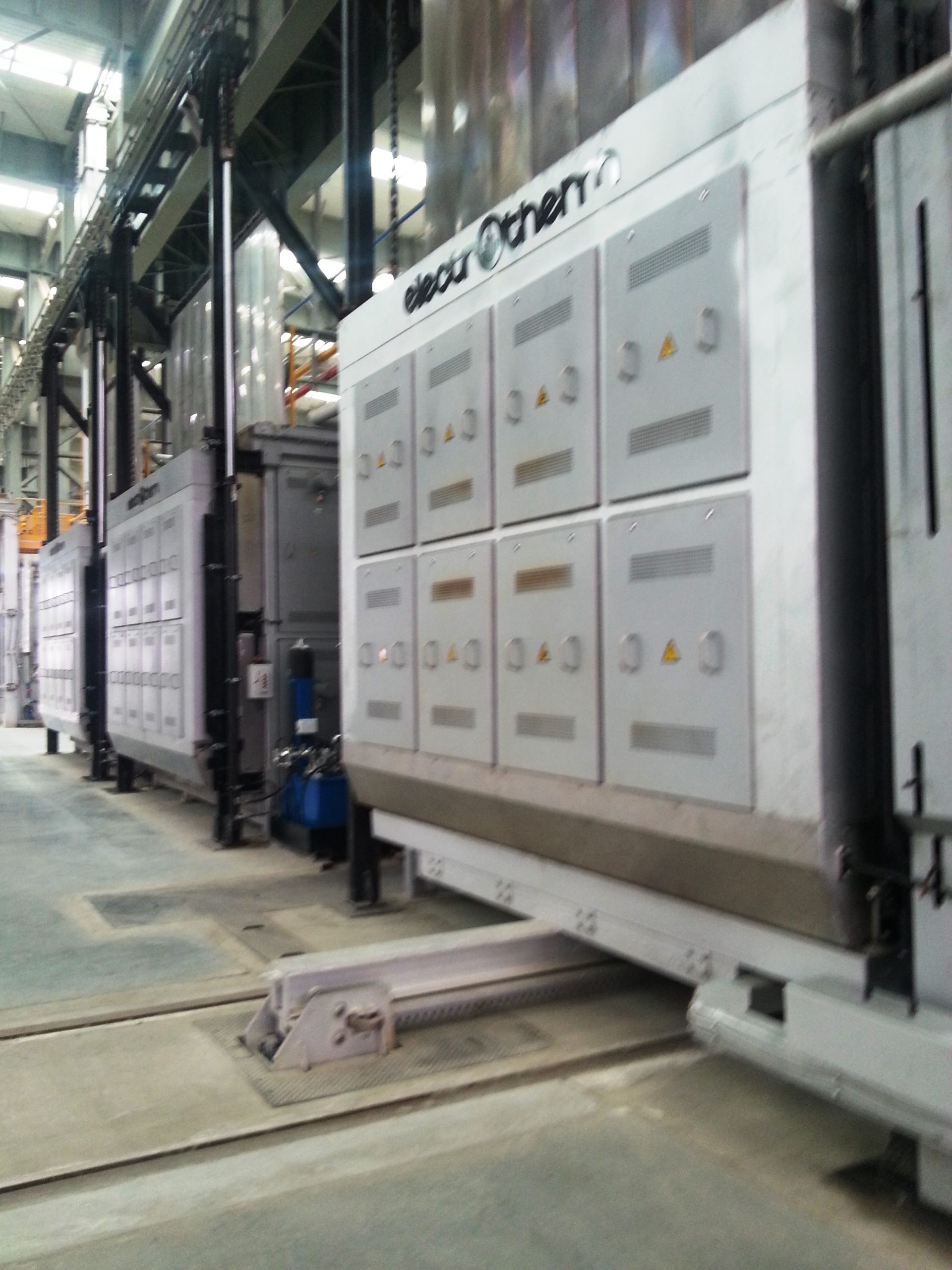
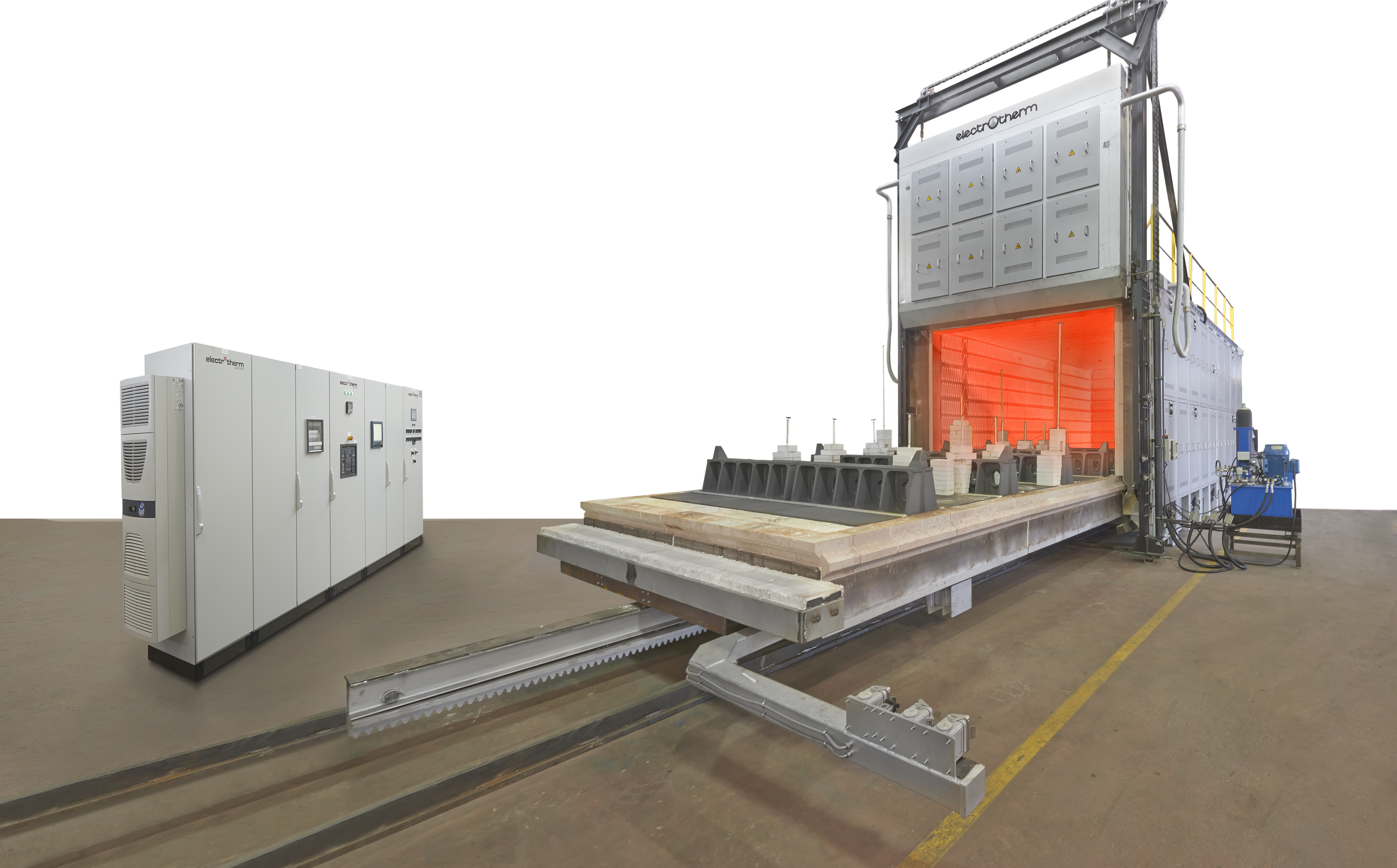
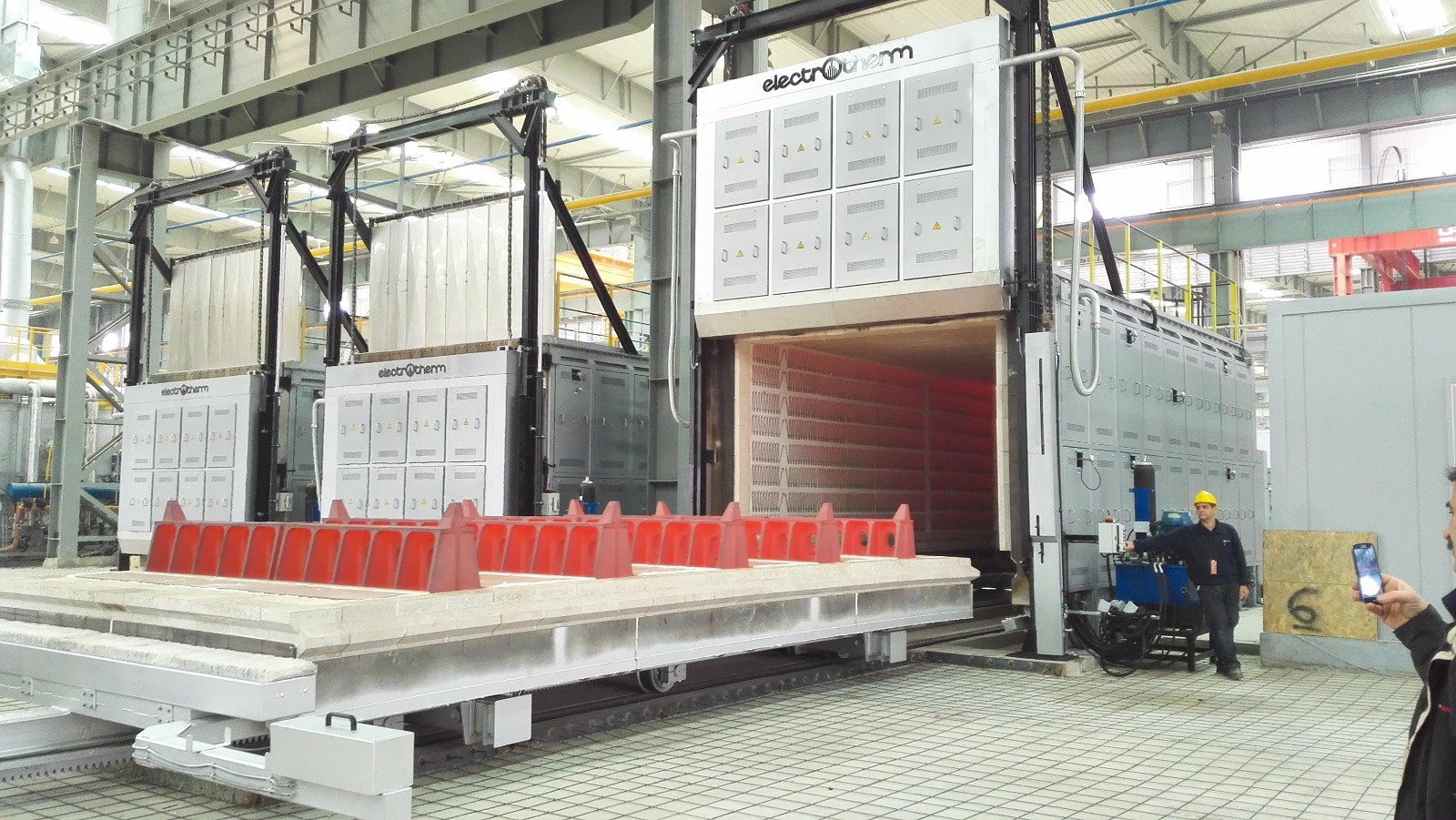
High temperature car bottom furnaces are commonly used for metal heat treating in air or protective atmospheres and many other processes. They are manufactured in a wide variety of sizes and temperature ranges and exclusively designed for intensive use. They assure temperature uniformity repeatability of not less than ±8°C (±14°F) according to AMS2750F, Class 3 furnaces.


Video

  • ISO 9001
  • RPS-953
  • AMS-2750F
  • NADCAP

Introduction

High Temperature Car Bottom Furnaces are heavy-duty, rail-mounted industrial heat-treatment systems designed for intense heat processing—commonly operating between 750°C and 1,250°C (1,380–2,280 °F). Ideal for austenitizing, normalizing, forging reheat, and sintering, these furnaces excel in automotive, aerospace, steel, and heavy-equipment industries where large, oversized, or complex loads are routine.

With a movable “car” hearth, these furnaces allow loading/unloading outside the chamber, minimizing thermal shock and preserving furnace lining. They offer both energy efficiency and harsh environment durability.


Key Benefits & User Value

  • Extreme Temperature Capability – Operate up to 1,250 °C using gas or electric heat
  • High Load Capacity – Process loads from a few hundred kg to 150+ metric tons
  • Flexible Atmospheres – Options for air or controlled  Atm
  • Excellent Uniformity – ±10 °F (±5 °C) achievable with multi-zone control and

System Components Overview

Component Function User Benefit
Rail-Mounted Car Moves parts in/out via track Safe loading, minimal damage, heavy/odd geometry handling
Heating System Gas burners or electric (SiC, Fibrothal®) elements High-temperature range, clean electric option available
Multi-Layer Insulation Fiber blankets, Mega‑Block®, or brick with sealing Minimal heat loss, robust thermal performance
PLC & Controls Recipe management, PID zones, safety interlocks Full traceability, integration, NAMCAP/AMS compliance
Door Seals Pneumatic or mechanical lift seals Maintain temperature, reduce air infiltration
Optional Quench Unit Gas/oil/water quench options Adapt to various processes like hardening or annealing


Process Workflow

  1. Loading & Car Entry
    Car is rolled out, loaded with parts (e.g., forgings, castings), then air-sealed.
  2. Ramp-Up Stage
    Gradual heating to target (700–1,250 °C) with multi-zoned control to minimize gradients.
  3. Soak / Process Stage
    Holds temperature until heat-treatment step completes (e.g., austenitizing, homogenizing).
  4. Quench or Cool-Down
    Push-button quench or natural cooling based on process controlled atmospheres where needed.
  5. Unload & Repeat
    Car rolls out for removal while the furnace reloads—the semi-continuous cycle reduces downtime.


Process & Material Comparison

Process Temperature Atmosphere/Quench Common Parts
Austenitizing 900–1,250 °C Usually air or inert Steels prior to quench
Normalizing 900–1,200 °C Air cooling Forged shafts, castings
Pre-Forge Reheat 1,100–1,250 °C Protective gas Large forgings, wheels, aerospace bars
Sintering 1,000–1,250 °C nitrogen Powder-metal parts, hard alloys
Annealing 850–1,000 °C Slow cool in air Tool steels, stress relief


Comparative Table

Feature High‑Temp Car Bottom Batch Box Furnace Vacuum Pit Furnace
Max Temp 1,250 °C ≈1,100 °C ≈1,200 °C
Load Size Up to 150 t Small–mid-size loads Moderate–large loads
Uniformity Excellent (±5 °C) Good to moderate ±10–20 °C Excellent ±5 °C under vacuum
Heating Mode Semi‑continuous Batch (stop-start) Batch with vacuum cycle
Atmosphere Options Air, inert Air, protective gas High vacuum/quench variant
Energy Efficiency High with fiber insulation & seals Moderate–high depending insulation High, electric but vacuum pump energy


Industry Use Cases

  • Automotive Forgings & Castings
    Reliable high-temperature forge reheats and normalizing—e.g., crankshafts, gear blanks.
  • Aerospace Alloys
    Homogenization and sintering of nickel and titanium parts
  • Heavy-Equipment Steel
    Heat-treatment of large structures (frames, weldments) up to 100 t per cycle .
  • Specialty Metallurgy
    Powder metallurgy components plus advanced alloy sintering in inert atmosphere.


Design & Integration Considerations

  1. Temperature Uniformity Mapping – Validate ±5 °C with AMS2750 or ASTM standard mapping protocols.
  2. Heating Method Choice – Decide between gas (higher peak temps) and electric (clean, zero emissions)
  3. Atmosphere Selection – Required inert for oxidation-critical parts.
  4. Car & Rail Design – Ensure crane loading capability, seal type (door- or car-lift).
  5. Installation Footprint – Balancing car travel, clearances, and crane access.
  6. Controls & Integration – PLC/HMI with data logging, MES connectivity for Industry 4.0 compliance.


Why ElectroTherm Industry?

  • Deep Specialization in high-temperature heat treatment for automotive, aerospace, and heavy steel sectors.
  • Turnkey Solutions: design, build, install, automate—with commissioning and training included.
  • Energy-Smart Systems: advanced ceramic-fiber insulation, pulse combustion, smart quench integration.
  • Compliance-Ready: Meets AMS2750, NADCAP, CQI-9, ASTM, ASME quality and traceability standards
  • Adaptable Design: Electric, gas; modular rail-mounted systems that scale with plant needs.

Frequently Asked Questions

What maximum temperature can be reached?
Up to 1,250°C (2,280°F) with gas or electric heating—covering all high-temperature processes

How uniform is the heat zone?
Achieves ±10°F (±5°C) across the chamber with proper zoning and insulation .

Are electric-only models available?
Yes—fully electric versions using fiber modules (e.g., Kanthal Fibrothal®) offer clean, efficient heating

What atmosphere control options exist?
Flexibility includes air, nitrogen and quench medium as needed—ideal for oxidation-sensitive or critical alloy processes.

Can this integrate into Industry 4.0?
Absolutely—PLC & HMI with MES connectivity, full data logging, recipe control, and traceability are standard.

What capacity range is possible?
From a few tons to 150+ t per charge, tailored to your production scale

Summary

A High Temperature Car Bottom Furnace from ElectroTherm Industry offers a powerful combination of:

  • Ultra-high Temp Range (8750–1,250 °C)
  • Heavy-duty Load Capacity (hundreds of tons)
  • Tight Uniformity (±5 °C)
  • Flexible Atmosphere & Quench control
  • Energy Efficiency and emission reduction
  • Seamless automation and quality compliance

Whether you’re processing forgings, aerospace alloys, or steel structures, this system delivers the precision, throughput, and control modern manufacturing demands.

CHARACTERISTICS

ELCB – 4950/1080
ELCB – 12000/1080
ELCB – 16000/1160
ELCB – 33600/1300
Effective working zone (WxDxH)
MM
1500x2200x1500
2000x4000x1500
4000x4000x1000
3000x7000x1600
IN
59x87x59
79x157x59
157x157x39
118x276x63
Volume
L
4950
12000
16000
33600
Exterior dimensions (WxL)
mm
3500×800
4000×11000
5700×10500
in
138×31
157×433
224×413
Max. temperature
1080
1080
1160
1300
1976
1976
2120
2372
Heating power
KW
240
240
240
1120

Introduction

High Temperature Car Bottom Furnaces are heavy-duty, rail-mounted industrial heat-treatment systems designed for intense heat processing—commonly operating between 750°C and 1,250°C (1,380–2,280 °F). Ideal for austenitizing, normalizing, forging reheat, and sintering, these furnaces excel in automotive, aerospace, steel, and heavy-equipment industries where large, oversized, or complex loads are routine.

With a movable “car” hearth, these furnaces allow loading/unloading outside the chamber, minimizing thermal shock and preserving furnace lining. They offer both energy efficiency and harsh environment durability.


Key Benefits & User Value

  • Extreme Temperature Capability – Operate up to 1,250 °C using gas or electric heat
  • High Load Capacity – Process loads from a few hundred kg to 150+ metric tons
  • Flexible Atmospheres – Options for air or controlled  Atm
  • Excellent Uniformity – ±10 °F (±5 °C) achievable with multi-zone control and

System Components Overview

Component Function User Benefit
Rail-Mounted Car Moves parts in/out via track Safe loading, minimal damage, heavy/odd geometry handling
Heating System Gas burners or electric (SiC, Fibrothal®) elements High-temperature range, clean electric option available
Multi-Layer Insulation Fiber blankets, Mega‑Block®, or brick with sealing Minimal heat loss, robust thermal performance
PLC & Controls Recipe management, PID zones, safety interlocks Full traceability, integration, NAMCAP/AMS compliance
Door Seals Pneumatic or mechanical lift seals Maintain temperature, reduce air infiltration
Optional Quench Unit Gas/oil/water quench options Adapt to various processes like hardening or annealing


Process Workflow

  1. Loading & Car Entry
    Car is rolled out, loaded with parts (e.g., forgings, castings), then air-sealed.
  2. Ramp-Up Stage
    Gradual heating to target (700–1,250 °C) with multi-zoned control to minimize gradients.
  3. Soak / Process Stage
    Holds temperature until heat-treatment step completes (e.g., austenitizing, homogenizing).
  4. Quench or Cool-Down
    Push-button quench or natural cooling based on process controlled atmospheres where needed.
  5. Unload & Repeat
    Car rolls out for removal while the furnace reloads—the semi-continuous cycle reduces downtime.


Process & Material Comparison

Process Temperature Atmosphere/Quench Common Parts
Austenitizing 900–1,250 °C Usually air or inert Steels prior to quench
Normalizing 900–1,200 °C Air cooling Forged shafts, castings
Pre-Forge Reheat 1,100–1,250 °C Protective gas Large forgings, wheels, aerospace bars
Sintering 1,000–1,250 °C nitrogen Powder-metal parts, hard alloys
Annealing 850–1,000 °C Slow cool in air Tool steels, stress relief


Comparative Table

Feature High‑Temp Car Bottom Batch Box Furnace Vacuum Pit Furnace
Max Temp 1,250 °C ≈1,100 °C ≈1,200 °C
Load Size Up to 150 t Small–mid-size loads Moderate–large loads
Uniformity Excellent (±5 °C) Good to moderate ±10–20 °C Excellent ±5 °C under vacuum
Heating Mode Semi‑continuous Batch (stop-start) Batch with vacuum cycle
Atmosphere Options Air, inert Air, protective gas High vacuum/quench variant
Energy Efficiency High with fiber insulation & seals Moderate–high depending insulation High, electric but vacuum pump energy


Industry Use Cases

  • Automotive Forgings & Castings
    Reliable high-temperature forge reheats and normalizing—e.g., crankshafts, gear blanks.
  • Aerospace Alloys
    Homogenization and sintering of nickel and titanium parts
  • Heavy-Equipment Steel
    Heat-treatment of large structures (frames, weldments) up to 100 t per cycle .
  • Specialty Metallurgy
    Powder metallurgy components plus advanced alloy sintering in inert atmosphere.


Design & Integration Considerations

  1. Temperature Uniformity Mapping – Validate ±5 °C with AMS2750 or ASTM standard mapping protocols.
  2. Heating Method Choice – Decide between gas (higher peak temps) and electric (clean, zero emissions)
  3. Atmosphere Selection – Required inert for oxidation-critical parts.
  4. Car & Rail Design – Ensure crane loading capability, seal type (door- or car-lift).
  5. Installation Footprint – Balancing car travel, clearances, and crane access.
  6. Controls & Integration – PLC/HMI with data logging, MES connectivity for Industry 4.0 compliance.


Why ElectroTherm Industry?

  • Deep Specialization in high-temperature heat treatment for automotive, aerospace, and heavy steel sectors.
  • Turnkey Solutions: design, build, install, automate—with commissioning and training included.
  • Energy-Smart Systems: advanced ceramic-fiber insulation, pulse combustion, smart quench integration.
  • Compliance-Ready: Meets AMS2750, NADCAP, CQI-9, ASTM, ASME quality and traceability standards
  • Adaptable Design: Electric, gas; modular rail-mounted systems that scale with plant needs.

Frequently Asked Questions

What maximum temperature can be reached?
Up to 1,250°C (2,280°F) with gas or electric heating—covering all high-temperature processes

How uniform is the heat zone?
Achieves ±10°F (±5°C) across the chamber with proper zoning and insulation .

Are electric-only models available?
Yes—fully electric versions using fiber modules (e.g., Kanthal Fibrothal®) offer clean, efficient heating

What atmosphere control options exist?
Flexibility includes air, nitrogen and quench medium as needed—ideal for oxidation-sensitive or critical alloy processes.

Can this integrate into Industry 4.0?
Absolutely—PLC & HMI with MES connectivity, full data logging, recipe control, and traceability are standard.

What capacity range is possible?
From a few tons to 150+ t per charge, tailored to your production scale

Summary

A High Temperature Car Bottom Furnace from ElectroTherm Industry offers a powerful combination of:

  • Ultra-high Temp Range (8750–1,250 °C)
  • Heavy-duty Load Capacity (hundreds of tons)
  • Tight Uniformity (±5 °C)
  • Flexible Atmosphere & Quench control
  • Energy Efficiency and emission reduction
  • Seamless automation and quality compliance

Whether you’re processing forgings, aerospace alloys, or steel structures, this system delivers the precision, throughput, and control modern manufacturing demands.

COMPLEMENTARY PRODUCTS

Fluxless MG REecycling Systems – EFRS-500

Large Rotary Hearth Furnace

High Temperature Box Furnaces